University of California, Berkeley, introduced by American visiting students’ answers series
Academic bridge Acabridge
Pay attention to Academic Bridge Acabridge for the latest visiting information.
School introduction
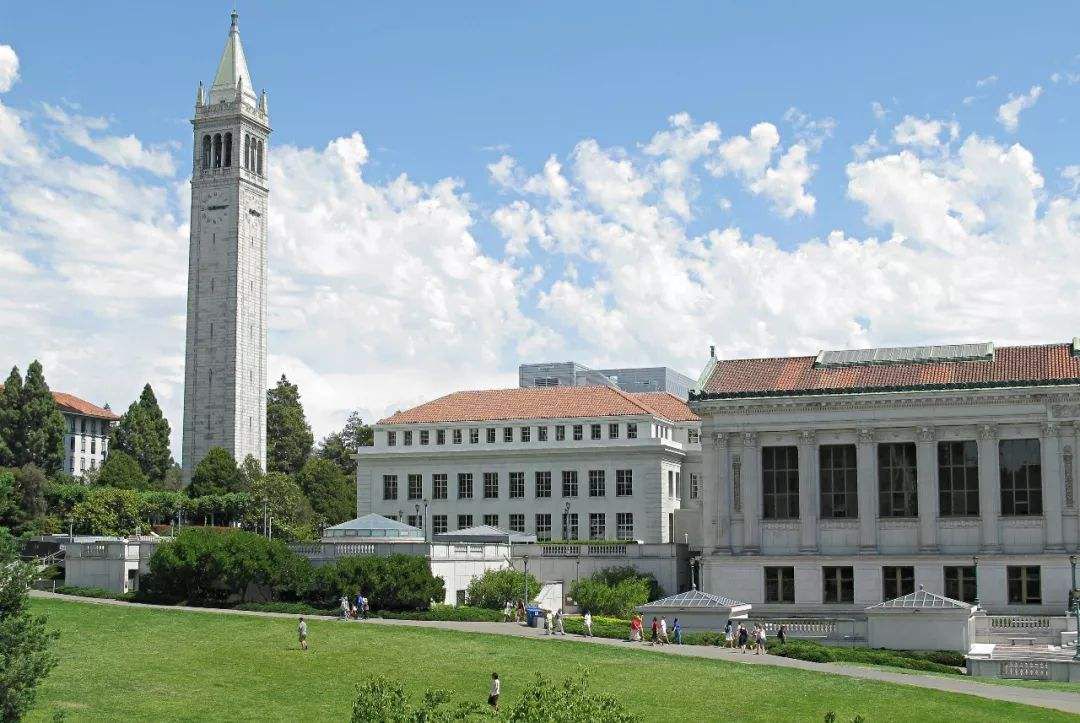
The University of California at Berkeley is about 15 miles from San Francisco, the so-called Bay Area. Public universities, often called Berkeley University or University of California, were founded in 1868. The university is divided into 14 colleges and schools, namely Haas Business School, Chemistry College, Law School, Engineering College, Public Health College, Education College, Environmental Design College, Information College, Journalism College, Letters and Science College, Natural Resources College, Optometry College, Richard and Rhoda Goldman School of Public Policy and Social Welfare College.
Many graduate students in Berkeley live off campus, but they can also choose to live in university dormitories. About 15% of the students are international students. Every year, about 3,000 international scholars from China or other countries hold temporary teaching or research positions in Berkeley University. The research of Berkeley University is not only carried out in the laboratories and research centers of academic departments, but also in some museums and biological field stations managed by the university. For example, the research of botany, zoology, ecosystem and forestry is carried out in remote field stations.
According to US News statistics, the total number of students in Berkeley University is 36,468, including 6,375 international students and 2,773 academic staff. According to the latest ranking of US News, the top five majors of Berkeley University are: No.1: Chemistry, Environment/Ecology; No.2: physics, space science; No.3: biology and biochemistry, economy and commerce, plant and animal science; No.4: mathematics; No.5: earth science, material science.

Second, the relevant requirements of the International Department of Berkeley University for J visa exchange visiting scholars (for specific and more comprehensive rules, please further consult and refer to the detailed terms of the corresponding departments and departments of Berkeley University).
1. J-1 English level of exchange visitors:
There are three ways to verify a scholar’s English language ability:
A) recognized English language test. IELTS score requirement is 6.5 or higher; TOEFL score is 80 or higher; A paper test (PBT) score of 550 or higher. The host department may choose different scores and validity periods according to its course requirements.
B) Certified by an academic institution or an English language school. The certification includes: the name of the scholar/date of issuance/position of the school staff/printed name of the school staff/signature of the school staff, such as the certificate that the chairman, professor, dean, PI, academic consultant or English teacher/scholar "has enough English level to successfully participate in his or her courses and play a role in daily work".
C) Interview conducted by UCB outbound/outbound authorized personnel. Interviews should be conducted by people who have the right to evaluate the qualifications of scholars and can prove the English ability of scholars to the State Council, USA.
2. UCB’s J-1 scholar classification:
A) J-1 research scholars: visiting scholars mainly pay attention to research, observation or consultation related to research projects, and are also allowed to teach or lecture.
B) Professor J-1: Visiting scholars mainly focus on teaching, lecturing, observing or consulting. Professor J-1 can also participate in departmental research.
C) J-1 short-term scholar: a professor, a research scholar, or someone with similar education or achievements, who visits the United States for a short time to give lectures, observe, consult, train or demonstrate special skills.
D) J-1 exchange students: individuals who participate in prescribed academic courses with specific educational goals. Such courses may include classroom teaching and research projects. Exchange visitors can attend courses for non-degree students for no more than 24 months.
3. Apply for visiting scholar qualification of Berkeley University: Berkeley University hosts more than 3,000 visiting scholars from all over the world every year, and carries out necessary education and research tasks under the guidance of Professor Berkeley. As a visiting researcher or visiting researcher, it aims to cultivate the ideological center and innovative cooperation space, and reserve knowledge and skills for future work in academia, industry, government and non-profit sectors. Former and present UC faculty members and all existing UC students are not allowed to apply for visiting scholars.
All applicants must first obtain an invitation letter from a professor at the University of California, Berkeley who is qualified to receive visiting scholars. Therefore, you need to search all the current professors and their related information on the websites of relevant departments, find a professor you are interested in and send an application to see if the professor is interested in cooperating with you and conducting project research with you. Once the professor you contacted agrees to receive your visit, the department where the professor works will directly cooperate with you to complete the electronic application form and other necessary paperwork.
Applicants must meet the following requirements:
A) Applicants visiting researchers and scholars are required to:
Must have a doctorate;
The visiting program is a study of mutual interest;
The application period for the first visit to school is at least one month and not more than one year;
B) Applicants for exchange visits are required to:
Must have a bachelor’s degree or foreign equivalent, and have achieved the degree goal at present;
It is suggested that visiting research is to meet the degree requirements of other universities;
The visiting program is a study of mutual interest.
The application period for the first visit to school is at least one month and not more than one year;
4. Capital requirements:
All international visiting researchers and visiting student researchers must produce proof of sufficient funds to show that there are enough funds to pay all accommodation expenses in the Bay Area (including the rent for the first month and last month). At present, the minimum funds required by J-1 scholars are $1,800 per month, $500 per month for spouses and $300 per month for each child. (For more detailed information and the latest information about J Scholar’s financial requirements, please consult official website of Berkeley University).
5. Visa requirements:
Visa arrangements must be made several months before your planned arrival date or visa renewal date. Proper visa status is very important for obtaining or keeping an appointment and staying in the country. We suggest that you apply for a visa with your future department or ORU staff at Berkeley International Office.
6, health insurance requirements
All international visiting scholars and student researchers on the campus of the University of California, Berkeley must obtain medical insurance through Garnett-Powers & Associates, the insurance broker of the University of California, Berkeley, or other insurance companies during their visits. If you have an alternative insurance company, the insurance must meet the following requirements. If you are an international visiting scholar with your own insurance coverage, the insurance coverage must also meet the requirements of J-1 visa and provide the same insurance for your qualified family members.
Health insurance requirements
Each accident and illness in medical insurance is $100,000.
Deductible not exceeding $500 per accident or illness.
Co-insurance shall not exceed 25%
Medical evacuation insurance must be at least $50,000
Repatriation insurance must be at least $25,000
The waiting period for existing conditions must not exceed 12 months.
The carrier must obtain at least "A" rating or be fully trusted and supported by the exchange visitor government.
If your insurance meets the minimum insurance requirements, you can choose to give up the health insurance provided by the University of California at Berkeley through Garnett-Powers & Associates. Otherwise, visiting scholars and student researchers must join the program through Garnett-Powers & Associates within 31 days after the appointment start date. If you don’t register in time, you won’t get the benefits in the current plan year.
7. Payment of university service fees:
All visiting scholars and visiting student researchers must pay university service fees to meet the affiliation requirements of VSPA and obtain university services (such as library visits, ID cards and Berkeley email accounts). Fees must be paid within 3 days of the appointment start date, and the university service fee is an annual fee, which is not calculated pro rata. If you check out during the break or continue to make an appointment for one year, you must pay the renewal fee.
The fees for visiting students and visiting student researchers at the University of California, Berkeley are lower than those of many peers. This new fee structure will put the VSPA program on a solid financial foundation and provide additional resources to meet the key needs in the fields of housing, child care and ADA accommodation.
◆ Resources provided by Berkeley University for scholars
A) General resources: professional development speeches, campus benefits and privileges …
B) Housing: finding housing and accommodation, choosing temporary housing, Renter’s legal aid (RLA), Berkeley Rent Stability Committee …
C) Daily life: information about local grocery stores, public transportation, public utilities and banks …
D) Campus office: authorized unit directory, campus service unit directory, Berkeley International Office (BIO), international housing plans and activities, parking and transportation, sponsored project office, university health service, library website, library information and career center.
E) Special projects: Berkeley Postdoctoral Association (BPA), Berkeley Postdoctoral Entrepreneur Program (BPEP), Berkeley Spouse Partnership Program (BSPP), Postdoctoral Industry Exploration Program (PIEP), Postdoctoral Teaching Opportunity Program (PTOP), Postdoctoral Equity Network Opportunity (OPEN), Language and Communication.
F) Community resources: Office for the Prevention of Harassment and Discrimination, University of California, Berkeley-Survivors provide resources and recommendations for survivors who have suffered sexual violence, attacks and harassment and their allies to get help, reports and mutual support; As well as policy and legal information.
G) Travel Pro: expedited passport and visa procedures, list of immigration lawyers.
◆ At present, some visiting scholar programs being enrolled by different departments of Berkeley University are for your reference.
Visiting Scholars Program in Building Science at UC Berkeley …
A) Program Overview plan overview:
We accept visiting scholars at any level, including graduate students (masters or doctors), university teachers and professionals in the construction industry. The application process is very competitive, and your interest needs to be closely related to the ongoing research of CBE, because your statement is a key part of the evaluation process. Visiting scholars must have some previous research experience, technology and writing skills, and be familiar with CBE research topics.
B) Administrative Details
Priority will be given to those who are willing to stay for at least 12 months, but we will also consider visiting scholars with shorter time. Visiting scholars must pay university fees (for more information about this fee, please find out in official website, Berkeley University). You need to obtain the "J-1" visa qualification, and your capital needs are at least $1,600 per month, and you need to pay about $600 to the visiting scholars and postdoctoral affairs department of the University of California, Berkeley. We usually do not provide financial support for visiting scholars. Finally, you must be able to prove your fluency in spoken and written English.
C) How to Apply for?
To consider visiting scholars, please provide the following information:
I. Your resume contains information about education, research experience, papers and technical skills (for example, software you are familiar with. )
Ii. A one-page description of the research you want to do in CBE.
Iii. The period of time you want to stay in CBE (and your time flexibility). After being approved by CBE, it takes about 3-4 months to get a visa.
Iv. Confirm that you are financially independent during your stay. Please let us know if you are funded by an institutional source (for example, a university, a grant or a company).
If you need a computer or you plan to use your own laptop, please let us know.
Vi. Please send these materials to Professor Edward Arens (earens@berkeley.edu) and use the CBE Visiting Scholar Program in the subject of the email.
Current visiting scholars | department of history (current visiting scholar program of history department of Berkeley University)
Visiting Scholars Program | Linguistics (Visiting Scholars Program, University of Berkeley)
Applications for Visiting Scholars Program | Berkeley Law (Application for Visiting Scholars Program in Law School of Berkeley University)
(The more visiting scholars program of Berkeley University and the foreign tutors of Berkeley University who can receive visiting scholars can consult us further or match them through our database of American visiting scholars.)
Want to know more.
Common sense and consultation of visiting scholars’ registration
Long press the QR code or click to read the original text.
Extended reading
Princeton University: Introduction of American Visiting Students’ Answers Series
Columbia university introduced by American visiting students’ sponsors series
Read the original text
Original title: "University of California, Berkeley, introduced by American visiting school respondents series"
Read the original text