Travel with Peace of Mind for the Blind —— Visiting Dalian Training Base for Guide Dogs in China
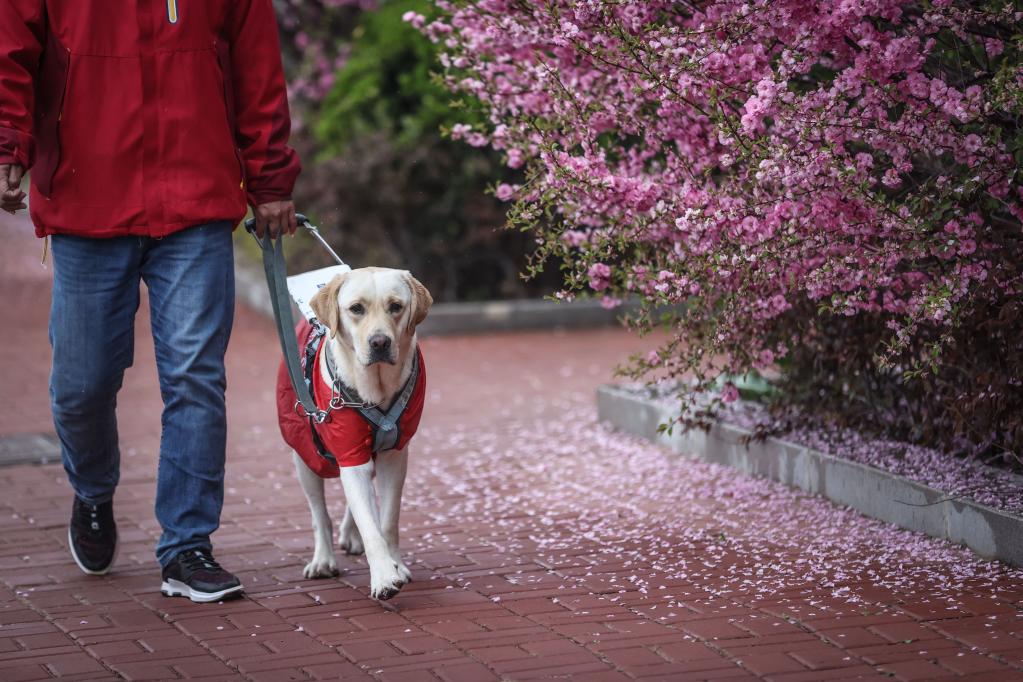
Fu Mingyan, the trainer of China Guide Dog Training Base, trained the dog "Mu Mu" (photo taken on April 22, 2021). Xinhua News Agency reporter Pan Xiaolong photo
Xinhua News Agency, Shenyang, April 30 (Reporter Wu Jiangmin, Zhang Boqun) Cars roared past, and one more step was the endless driveway. The guide dog Ping An quickly turned around and blocked the blind in front of the driveway. In the earphone, there came wangxin’s urgent voice: "Pay attention to the card position, just now ‘ Ping An ’ It has stopped. "
3 meters away, wangxin, holding a walkie-talkie, looked serious. As the trainer of Dalian Training Base for Guide Dogs in China, in the next month or so, she will teach the blind to use the password of guide dogs, so that the blind and guide dogs can build a bridge of mutual familiarity and trust.
This is a little-known job. Guide dogs can only serve one visually impaired person for a lifetime, and they can stay with them for 8 to 10 years at most. How to cooperate between guide dogs and blind people is very important. Wangxin has been doing this training for 13 years, helping nearly 200 blind people understand and learn to use guide dogs.
Wangxin’s understanding of the blind comes from his blind mother. When I was a child, after school, wangxin would pick up my mother from work and go shopping hand in hand. Later, she went to Japan to study, and the mother and daughter often talked. One day, wangxin learned that his mother had adopted a guide dog.
Wangxin initially had doubts about the role of guide dogs, but her mother’s change gradually dispelled her worries. My mother, who didn’t like going out, went for a walk in the park and became a daily routine. When the mother walks on the road with a guide dog, she will also take the initiative to answer questions from neighbors and passers-by. "She is better integrated into society and her life is more convenient." Wangxin said.
In 2010, under the guidance of her mother, wangxin joined the Dalian Training Base for Guide Dogs in China, and began to be responsible for the cooperation training between blind people and guide dogs.
During the training, wangxin integrated his psychological professional knowledge into it. First, he observed the changes of the blind’s expression and movements, and then provided appropriate guidance, so that the blind could slowly overcome their fear of traveling and use guide dogs more skillfully.
In addition to introducing foreign training courses, Dalian Training Base for Guide Dogs in China has also designed some instructions for guide dogs. The terrain in China is different and the road conditions are complicated. When passing the traffic lights, wangxin and his colleagues asked the blind to raise their right arms to remind passers-by, and issued a "don’t be distracted" command through voice to remind guide dogs to go straight ahead and cross the crosswalk.

Wang Lin, the trainer of China Guide Dog Dalian Training Base, trained Yummy, a dog in training, in a street in Lushunkou District, Dalian (photo taken on January 14, 2020). Xinhua News Agency reporter Pan Xiaolong photo
At the same time, the improvement of public policies has promoted the popularization of guide dogs. In recent years, China has successively issued regulations on barrier-free environment construction and "Several Provisions on Passengers with Visual Disabilities Carrying Guide Dogs into Stations (for Trial Implementation)", ensuring the convenience for blind people to travel with guide dogs, and aviation, railways, banks, subways, shopping malls and parks are also being opened to guide dogs one after another.
In 2018, China promulgated the national standards for guide dogs, which defined the selection conditions of guide dog candidates, and went through four stages: foster care period, training period, service period and retirement period. The service period was about 6 to 10 years.
"This document is very important for the development of guide dogs." Wangxin said that this shows that the level of barrier-free environment construction in China has been further improved.
On wangxin’s mobile phone, there are nearly 100 blind friends’ phone numbers, and she often receives their consultation and story sharing. A blind user from Zhengzhou said that he was afraid to go out in the past, but now he can travel around with a guide dog, and the radius of his life has been greatly expanded.
Dalian Training Base for Guide Dogs in China was established in 2006. At the beginning of its establishment, the base trained less than 10 qualified guide dogs every year. At present, the Dalian Training Base for Guide Dogs in China has delivered more than 300 guide dogs for the visually impaired free of charge.
The attention and understanding of guide dogs from all walks of life have also improved significantly. In 2022, many guide dogs appeared at the Beijing Winter Paralympics; There is a "barrier-free travel service" on the online car platform, which provides services for guide dog users and helps passengers carrying certified guide dogs to travel smoothly.
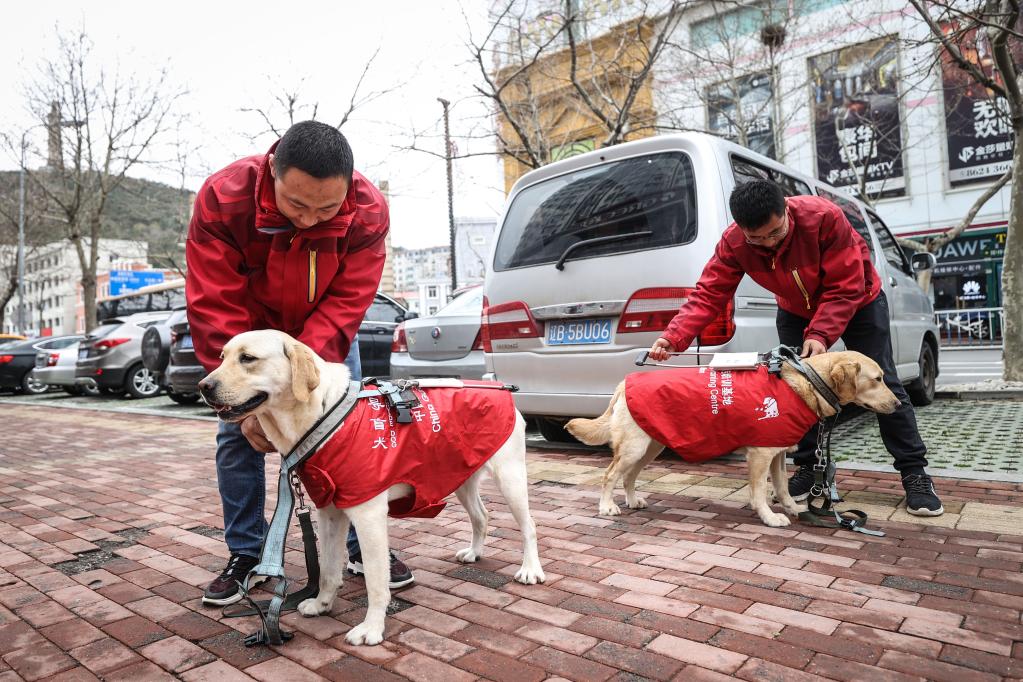
Fu Mingyan (left) and Jiang Boya (right), trainers of China Guide Dog Dalian Training Base, wear equipment for training dogs "Mu Mu" (lower left) and "Cool K" (lower right) (photo taken on April 23, 2021). Xinhua News Agency reporter Pan Xiaolong photo
April 26th this year is International Guide Dog Day. At a passenger station in Guangzhou, a training guide dog appeared on the street, inviting passengers to know and understand the guide dog, and sticking a heart-shaped sticker on the billboard "I would like to ride with the guide dog".
"At present, the number of guide dogs in China is still very small. It takes about two years to wait in line from submitting an application to receiving it." Wangxin said that she has confidence in the future development. The base receives emails from all over the country every month, and more and more young people are getting to know and understand this cause and applying to become volunteers. (Participating in writing: Wang Nan, Chen Wei)