Interview | How do chemical giants meet carbon emission reduction? Huntsman: This is the biggest opportunity.
"When this matter was announced, it happened to be the day before the (11th) China International Petrochemical Conference. To be honest, many chemical enterprises were very worried, and thought it was a great challenge, and would it increase the cost of our enterprises? This should be the first reaction of most chemical companies to hear this news. "
The "news" referred to by Pan Lumin, president of the global chemical giant Huntsman Polyurethane Asia-Pacific Region, is that on September 22nd, 2020, China announced that it would increase its national independent contribution, adopt more powerful policies and measures, and strive to achieve the peak of carbon dioxide emissions by 2030 and carbon neutrality by 2060.
This is the first time that China explicitly put forward the goal of carbon neutrality. As a key area of carbon emissions, how does the chemical industry think about the relationship between achieving this goal and the fate of the enterprise itself? Recently, Pan Lumin said in an exclusive interview with The Paper (www.thepaper.cn) reporter, "My first reaction was very different." Pan Lumin’s explanation was slightly exciting. "I am still telling our colleagues today that I have been in this industry for more than 20 years, and this is the biggest opportunity for me to see the use of polyurethane in the world. My reaction is this."
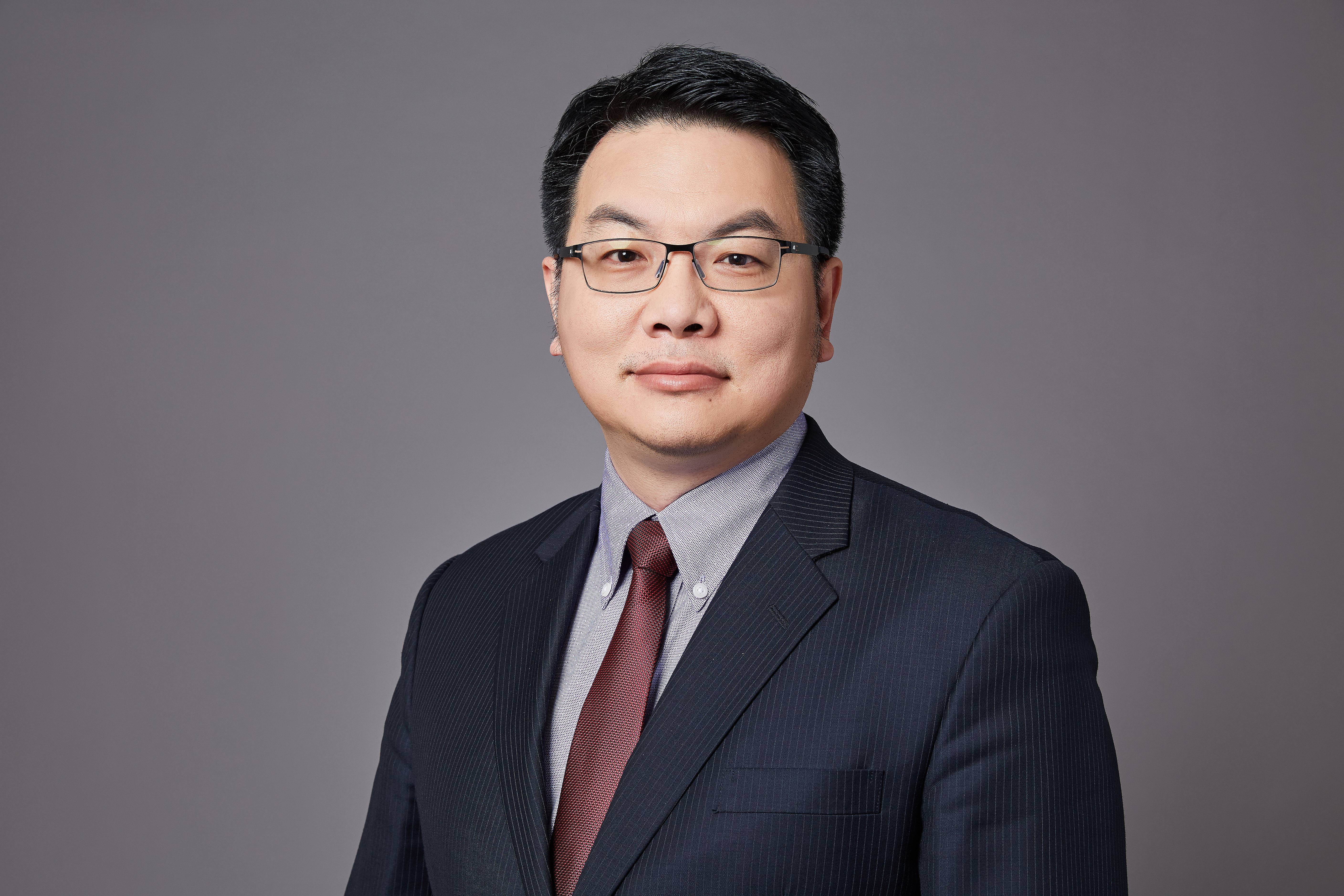
Pan Lumin, President of Huntsman Polyurethane Asia Pacific Region.
Huntsman was founded in 1970, and the company is headquartered in Salt Lake City, Utah, USA. Its business covers chemicals, plastics, textiles, footwear, paints and coatings, building materials and so on. In 2019, Huntsman’s operating income was about 7 billion US dollars, nearly half of which came from polyurethane (PU) business unit. As the earliest global polyurethane giant to enter China, its accumulated investment in China has exceeded 15 billion yuan.
"Polyurethane is the best energy-saving thermal insulation material." Pan Lumin has high hopes for the company’s star products. "Our products can be carbon neutral in their life cycle, even more than carbon neutral, and we can achieve a net reduction in carbon." Pan Lumin said that Huntsman will prove this assertion to the outside world with clear data in the future.
It is worth mentioning that due to the high technical threshold and huge investment, polyurethane is still controlled by a few international giants, and China Wanhua Chemical, which entered the market late, is the only company from China. As a "young" material invented only about 80 years ago, polyurethane has become an important building material because of its thermal insulation, waterproof and other properties, and at the same time, it has shown its talents in the fields of home appliances and transportation. "When you are driving, what you sit on (the seat cushion), what you hold in your hand (the steering wheel) and what you look at (the dashboard) are all our polyurethane", which is what Huntsman often says.
During the interview, Pan Lumin, who has been engaged in the polyurethane industry for 26 years and has been in his current position for 7 years, also emphasized his insistence that "sustainable development cannot be done for the sake of sustainable development, which is unsustainable." He believes that sustainable development must be linked with value creation, "that is, you are doing sustainable development while creating value. You must reflect these two things at the same time, and this thing can really last."
Start by pulling out the chimney
In recent years, Pan Lumin observed a phenomenon. At the investor conference he attended, investors no longer listed the financial situation as the primary concern, but asked "What did your company do on sustainable development?" Pan Lumin’s understanding of this is: Today’s investors tend to be younger, and they think about the future of the earth.
Huntsman is not passive in dealing with these investors. Pan Lumin told the The Paper reporter, "Because of fate, we began to put sustainable development on the strategic level in China and the Asia-Pacific region five years ago and really put it into practice."
Back in October 2016, Taikoo Heating Project, the first successful long-distance heating project with large temperature difference in China, was officially put into operation, and the overall project construction lasted for two and a half years. In this project, Tsinghua University’s long-distance heat supply technology with large temperature difference is adopted, and the waste heat of six generating units of Gujiao Xingneng Power Plant in Taiyuan, Shanxi Province is recovered to supply heat to Taiyuan urban area, with a total heating scale of 76 million square meters, accounting for 1/3 of the total heating area in Taiyuan urban area. Among them, four pipelines with a diameter of 1.4 meters (double supply and double return) laid from the first station of the power plant to the relay energy station are the key and difficult points of the project. The length of this pipeline is 37.8km, including 20.1km of direct burial, 15.7km of tunnel and 2.0km of overhead in the field. The long-distance pipeline crosses Fenhe River for six times, railways for two times, expressways for three times, Yellow River Diversion Pipeline for two times and Taigang Concentrate Powder Pipeline for many times.
"The opportunity we started is Taiyuan, a central heating project." In this project, the large-diameter all-water foaming pipeline system provided by Huntsman ensures remote and efficient heating. "Polyurethane is a good application here, which can finally control the temperature reduction within 2 degrees Celsius, that is to say, its thermal insulation performance is very good."
This major livelihood project has made great contributions to the total elimination of small boilers of 3.5 MW and below and the control of loose coal in Taiyuan by the end of 2017. Recalling the project, Pan Lumin said, "At that time, we calculated that there were about 5,000 small heating stations in the whole urban area of Taiyuan, which was simply 5,000 chimneys. The first point of such a project is to effectively use the waste heat of the power plant, and the second point is to be able to unplug 5,000 chimneys in Taiyuan City. "
"In fact, in this central heating project, we have solved the problem of using the waste heat of 100 power plants, which means that 500,000 chimneys have been pulled out, and about 200 million people have benefited." The realization of this difficult project has brought Pan Lumin more thoughts. "It is a great shock to me. I haven’t seen what changes the chemical industry we are doing and the solutions we provide have made to our lives after accumulation. From then on, we will promote the four sustainable innovations."
Since 2018, Huntsman has put forward four innovative solutions for sustainable development, namely, thermal insulation solution (to help air bid farewell to pollution), automobile solution (to help remove odor in cars), food supply chain solution (to help food safety insurance), and environmentally friendly solvent-free solution (to help environmental protection refuse solvents).
"Since five years ago, we have paid special attention to sustainable development and innovation. Up to now, we have done too much. Almost all our innovations and subsequent development directions are all around sustainable development."
Focus on the contribution of downstream innovation to carbon emission reduction.
Since 2010, Huntsman plans to implement the Crouching Tiger Plan in the Asia-Pacific region, which is a strategic transformation from bulk raw materials (MDI) to downstream applications. Pan Lumin believes that commodities with transparent prices are not the way for Huntsman to go. "We must take the differentiation that can create more value, and we must go downstream. The original idea was as simple as that."
"Crouching Tiger Plan" has gradually increased the proportion of Huntsman’s special chemicals business and gradually decreased the praise ratio of bulk business. "It takes many years to accumulate, and it will take five consecutive years and ten consecutive years to accumulate to the point where we are today."
This road of product differentiation is also in line with Pan Lumin himself. "Many people can’t get out of the polyurethane industry all their lives after entering it. I have been in this industry for more than 20 years. In fact, my happiest thing is to wake up every morning and have a new topic to talk about."
Today, Pan Lumin no longer regards himself as a "chemical worker", but prefers to describe himself as a person who "provides solutions" for many application fields.
In the interview, Pan Lumin mentioned the pig industry that he didn’t understand three years ago. "This is the fastest growing downstream application of polyurethane in China market in the past year or two." This change is mainly due to the impact of the African swine fever epidemic. On August 3, 2018, the Information Office of the Ministry of Agriculture and Rural Affairs reported the first African swine fever epidemic in China, and then the virus quickly spread to most parts of the country. This epidemic has accelerated the withdrawal of small and medium-sized retail investors in the domestic pig industry and greatly increased the industrial concentration. In the construction of new pigsty, polyurethane materials with energy saving and thermal insulation have found a new application field.
Such application cases are constantly being introduced. On December 1, 2020, Huntsman and Henan Chaocheng Building Materials Technology Co., Ltd. held the off-line ceremony of the first batch of polyurethane continuous plates based on Tylo polyester polyol in Xinxiang, Henan. In this cooperation, Huntsman provided polyurethane based on Tylenol polyester polyol (mainly used for cold storage insulation materials), which is the first polyurethane continuous plate project based on Tylenol polyester polyol laid out by Huntsman in China.
Huntsman aims at the warehousing link in the fast-growing modern agriculture and logistics cold chain, and takes the food supply chain solution as a new important force point. Pan Lumin mentioned at that time that, especially after the epidemic, the safety and hygiene of the food supply chain received more attention, and more and more people began to worry about whether the world would face a food crisis after the epidemic crisis.
Zhang Jun, Commercial Director of Huntsman Polyurethane Division in China, introduced at that time that polyurethane is the material with the best thermal insulation performance on the market at present because of its excellent thermal insulation, fire resistance and flame retardancy. "If it is calculated by common cold storage, the electricity fee for one square meter per day is about 1 yuan, and the electricity fee for a 10,000-square-meter cold storage costs more than 3 million yuan a year. If you choose polyurethane thermal insulation materials, you can save at least 20% of the electricity fee."
In an interview with The Paper, Pan Lumin said that the COVID-19 epidemic sweeping the world has had a profound impact on all walks of life, but there is a kind of development trend that has not slowed down but is accelerating. "The cold chain is one of them." He analyzed that more online shopping and the shift of consumers from ordinary vegetable markets to supermarkets have made the demand for cold chains stronger than before the epidemic.
In Pan Lumin’s view, innovative applications such as central heating, new pigsty and cold chain warehouse are all important weights for Huntsman in carbon emission reduction, and at the same time, the carbon emissions brought by upstream production can not be ignored. "When the chemical industry mentions carbon emission reduction, it should look at both production and downstream. We will not only emphasize my downstream contribution, but I will also produce carbon emissions upstream."
Pan Lumin mentioned that Huntsman Polyurethane Asia Pacific is setting up a working group to reduce carbon emissions. "A key responsibility of this group is to calculate how much carbon emissions Huntsman will produce when making polyurethane in China? We will have data, because all our products are in it, so I have to calculate a’ yield’ of carbon emissions, which I believe is definitely much greater than 1, and we will calculate it responsibly. "
While paying more attention to the contribution of carbon emission reduction through downstream applications, measures are also being introduced in the upstream with limited space. Pan Lumin mentioned that Huntsman had previously developed a recycling technology for recycled PET plastics, which was used to produce TEROL™ Teruoyou polyester polyol, and 60% of its components came from recycled PET plastics, while polyester polyol was one of the important raw materials used to produce polyurethane materials. Huntsman’s current factory in Taiwan, China has a total production capacity of 33,000 tons per year and can recycle 250 million PET plastic bottles.
"At present, the recycling rate of PET plastics in Taiwan, China is the highest in the world, reaching 95%, which means that 100 bottles go out and 95 can be recycled." Pan Lumin said that although the recycling system in Chinese mainland has yet to be improved, it will reach the advanced level sooner or later. "We have been able to start to consider the next set of equipment in Chinese mainland, which means that the conditions for building an environmentally-friendly recycled polyester factory are becoming more and more mature."
"Whether upstream or downstream, we can now find the issue of sustainable development." And can we continue to expand the above-mentioned "rate of return" through technological innovation? This is Pan Lvmin’s requirement for the future of Huntsman polyurethane products.
Innovation comes from China.
As the earliest global polyurethane giant to enter China, Huntsman’s accumulated investment in China has reached 15 billion yuan, and China has become Huntsman’s second largest single country market in the world.
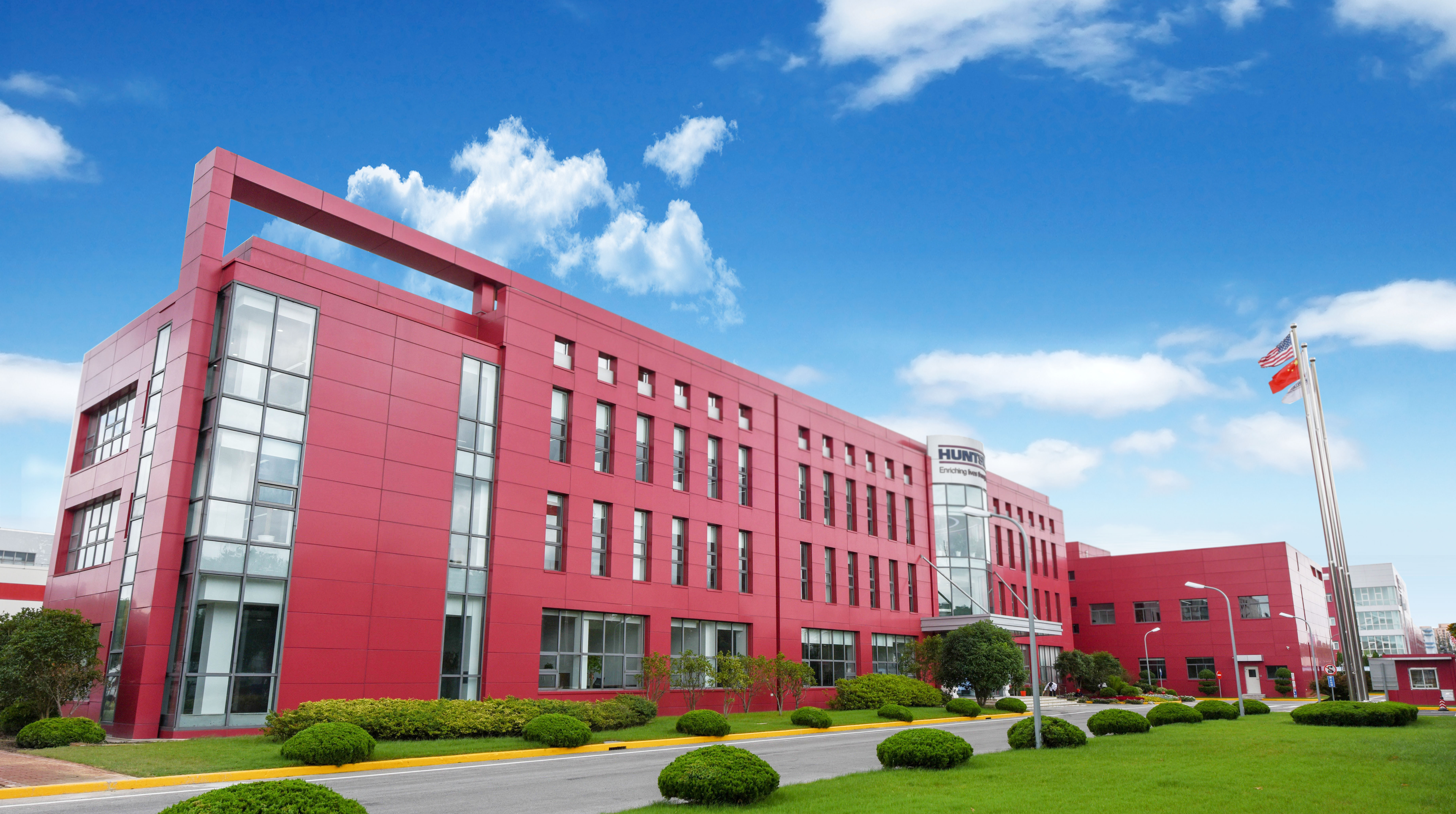
In September 1992, Huntsman Polyurethane (China) Co., Ltd. was registered and established in Minhang District Market Supervision Administration, becoming the first foreign-funded technical service center in the polyurethane field in China. In 1996, as the first foreign-funded polyurethane system material factory, Huntsman Polyurethane (China) Co., Ltd. was officially put into production.
Then in 1997, Huntsman decided to build a large-scale MDI (diphenylmethane diisocyanate, one of the main raw materials for producing polyurethane) production base in Shanghai. Nearly 10 years later, the first MDI factory was officially put into operation. In 2018, Huntsman’s largest single investment in China, MDI Plant Phase II, was put into operation in Shanghai, with a total investment of 750 million US dollars and a design capacity of 240,000 tons. So far, the total production capacity of Huntsman MDI in China has reached 400,000 tons, accounting for nearly one third of its global production capacity.
"We have invested a lot in China, and the investment is deep, and we will only go deeper." Pan Lumin said that at present, Huntsman Asia-Pacific Polyurethane Division led by him is in a "leader" position in the whole Huntsman in terms of sustainable development. "In the past five years, we have been the leader, and the next step is to continue to lead."
It is worth mentioning that in July 2019, Huntsman was approved by the Shanghai Municipal Government to certify the regional headquarters. On November 20, 2019, Huntsman Asia-Pacific Headquarters officially settled in Shanghai, and will gradually undertake the functions of Huntsman’s investment, management, trade and regional RMB and foreign currency fund allocation in the Asia-Pacific region, integrate and expand its existing equity and investment in the mainland, and further promote the business development of Huntsman Group in the Asia-Pacific region.
This progress is related to the Opinions of Shanghai Municipal People’s Government on Promoting the Development of Regional Headquarters of Multinational Corporations in Shanghai issued in August of that year. It is mentioned that the regional headquarters of multinational companies are allowed to centrally operate and manage the domestic and foreign funds of the member companies of the company under the cross-border fund pool business, and carry out the business of fund collection, allocation, settlement, hedging, investment and financing according to the group business model.
As early as 2008, Huntsman had moved its Asia-Pacific R&D center in Singapore to Shanghai. In 2016, Huntsman moved its R&D center in Shanghai to Minhang, which was connected with the previous factories and established the Shanghai Park. Up to now, Huntsman has three R&D centers around the world, including the Asia-Pacific R&D center in Shanghai, the Houston R&D center serving the American market at its headquarters and the R&D center serving the European market in Brussels, Belgium.
Pan Lumin told the The Paper reporter, "All the innovative examples we just mentioned were developed by our R&D center in Shanghai, not transplanted from other places. We developed them here, and there will be newer things constantly."
In Pan Lumin’s view, "China is probably the fastest in innovation now." He mentioned that perhaps Huntsman will have no room for quantitative expansion in Shanghai in the future. "But I definitely want to put innovation in Shanghai."