Water chestnut is nutritious, but don’t eat it raw.
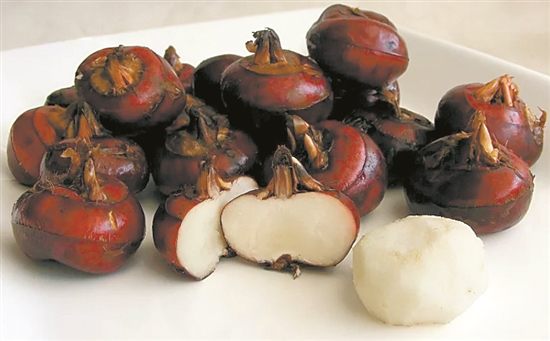
Horseshoe Map/vision china
□ Liu Jingjing
Water chestnut, also known as water chestnut, is an aquatic plant with white pulp, crisp and sweet taste and rich nutrition. But you must pay attention, water chestnut is best not to eat raw. Eating water chestnut raw may infect parasites, and may also cause inflammation, bleeding and even ulcers in your intestinal mucosa … … Children’s infection is even more terrible, which may lead to developmental retardation and mental retardation.
This is not an alarmist. Although water chestnut itself is not poisonous, it can easily carry a parasite.
Can eating water chestnut raw infect parasites?
Water chestnut is warm and humid, not cold-resistant, mainly distributed in Jiangsu, Anhui, Zhejiang, Guangdong and other southern regions. As all my friends know, water chestnuts are mostly planted in paddy fields.
The reason why water chestnut can’t be eaten raw is not because it is poisonous, but because of a parasite called ginger worm. The metacercaria of this ginger worm can survive in water and easily attach to the surface of aquatic water chestnut. If people eat ginger worms by mistake, they will parasitize in human duodenum, leading to a kind of ginger worm disease, which can cause intestinal ulcer, diarrhea or facial edema.
In addition to parasites, water chestnut skin is easy to carry some other harmful and toxic biological excreta and chemicals.
Therefore, water chestnut should never be eaten raw with skin, and it is best to cook it. If you really like the taste of fresh food, you might as well rinse it with light salt water after washing and peeling, and then eat it.
Undeniable nutritional value
According to the bottom shape of Eleocharis tuberosa, it can be divided into concave umbilicus and flat umbilicus. Generally, Eleocharis tuberosa with concave umbilicus has high soluble solids and water content, less residue and sweet taste, while Eleocharis tuberosa with flat umbilicus has coarse meat, high starch content and more residue, and is resistant to storage.
Eleocharis tuberosa itself is rich in starch, protein, fat, trace elements and vitamins, which has many edible benefits.
For example, the phosphorus content of water chestnut is the highest among all root vegetables. Phosphorus is not only an important component of human bones, but also an important component of various biological enzymes in nuclear proteins. Crude protein and starch in water chestnut can promote large intestine peristalsis; Modern medical research has also found that water chestnut has antibacterial and bacteriostatic effects, and its fruit extract water chestnut has a good inhibitory effect on Staphylococcus aureus, aerogenes and Escherichia coli, and also has the effect of lowering blood pressure; Some scholars have found that water chestnut also has preventive and therapeutic effects on cancer of esophagus, lung and breast.
Water chestnut has high sugar content, is easy to rot and deteriorate, and is not durable to store. Usually, when stored at 1℃ or 5℃, it can maintain a high freshness; At 10℃, the bulbs will become sweeter. If it is stored with mud, it can be stored for a longer time. However, because the water chestnut skin may carry parasites, if it is to be stored in the refrigerator, it is recommended to pack it in a fresh-keeping bag separately and store it separately from cooked food. (Source: Popular Science China)
interlinkage
Eat raw food that may be infected with parasites.
pork
Raw pork may carry parasites, and there is a risk of diseases such as taeniasis, trichinosis and ascariasis. Therefore, it must be cooked before eating, especially when you rinse hot pot, don’t worry for a while.
Freshwater fish and shrimp
Freshwater fish and shrimps are easy to parasitize liver flukes. When people eat raw and undercooked fish and shrimps, they may enter the human body, leading to liver diseases such as cholangitis and hepatolithiasis. Once infected, some parasites can even live in the human body for 20-30 years. Therefore, freshwater fish and shrimp must be cooked.
Pomacea canaliculata
Ampullaria canaliculata must not be eaten raw, otherwise it is most likely to be infected with angiostrongyliasis, leading to headache, vomiting and even mental disorders.